

Digital Divide 2.0: A professor’s dilemma on addressing disparities in tech use, AI tools and digital learning readiness and refusal
BY PARIS D. WICKER
Some of my students (and future education leaders) have no desire to learn or use generative AI, and this worries me for reasons that may not be receiving enough attention in the public discourse on AI usage.
As a university professor and someone who is cautiously engaging generative AI to support teaching, learning and research, I am fortunate to have access to, and take advantage of, a wide variety of AI tools, digital learning and training. Most recently, as a Lumen Circle AI teaching fellow, I spent a year exploring generative AI models and AI tools, and improving my prompt development. As someone committed to democratizing AI knowledge, I have begun to infuse opportunities for AI-assisted pedagogy into my class activities and assignments, only to find that some students are defiantly refusing to engage.
“I’m afraid of it.”
“Can I opt out of the AI activity?”
These are actual comments of recent graduate students when asked to incorporate AI into class activities and discussions. At first, their refusal surprised me. While I initially assumed this refusal stemmed from fear of the known and the unknown dangers of using AI, upon further reflection, I now see it as understandable and rooted in underdeveloped literacy about this technology, built on an unjust foundation of existing disparities.
While there is growing attention to how generative AI is shaping how students learn, socialize and cheat, I worry about what will happen to those without access or who refuse to engage at all. How will AI refusal change the current digital divide, which is often about equal access to technological devices?
To explore these questions, it helped to reframe refusal as a symptom, and not the problem. In my follow-up discussion with students about their intent to refuse AI, they shared fears of false accusations or disciplinary action for AI use, or worried that they cannot afford the high prices for access to premium models. These are valid concerns. At a time when generative AI detection tools are at best minimally accurate, this raises the question of who will be punished along the way in the Gen AI revolution. Without equity-minded AI implementation, bias in generative AI training and utilization may lead to unfair penalization of vulnerable student populations.
In an unjust system, the risks of AI may continue to outweigh the benefits, and students are well aware of this. I believe that as educators, we can encourage a critical AI adoption and reasoned AI resistance to minimize the digital divide. Furthermore, university students, especially graduate students, have the right to reach their own conclusions about AI. At the same time, it is much less effective to refuse from a place of ignorance; instead, it should come from a place of critical AI literacy that consistently places the social and ethical challenges of AI alongside any perceived opportunities.
Refusal and resistance should come from a place of deep knowledge and familiarity. In the rush to increase AI literacy and AI skill development, as educators, we must also make space for necessary dialogue on individual and collective attitudes on both the desire to use generative AI (and in what capacity) and the readiness and capacity for critical AI engagement, such as awareness of unequal disciplinary practices or inherent biases.
Like many new technologies that experience a variety of fast, medium and slow adoption, critical AI literacy-oriented activities can also make space for both the speed and the intensity of generative AI usage in higher education. In essence, we cannot effectively refuse that which we have not learned, and to allow students (and anyone else) to do so would not only further widen the digital divide beyond who has access to the right devices, of the haves and have-nots. It would also increase the divide between those who have the skills and knowledge to effectively engage, evaluate and critique generative AI (or the AI literate) and those who do not.
At the same time, the path to AI literacy must include acknowledgement of and engagement with the unjust and unequal conditions and consequences of AI usage. From energy-sucking, water-guzzling AI cooling centers, to the expansion of AI premium services, some benefit from such a system while many others do not. A way forward is not through blanketed, uninformed refusal, but rather through empowered, informed agency that comes with an in-depth exploration and scrutiny of generative AI. At a time when misinformation and anti-intellectualism are on the rise, the 400-year-old adage from philosopher Francis Bacon still rings true today in this AI revolution: “knowledge itself is power.”

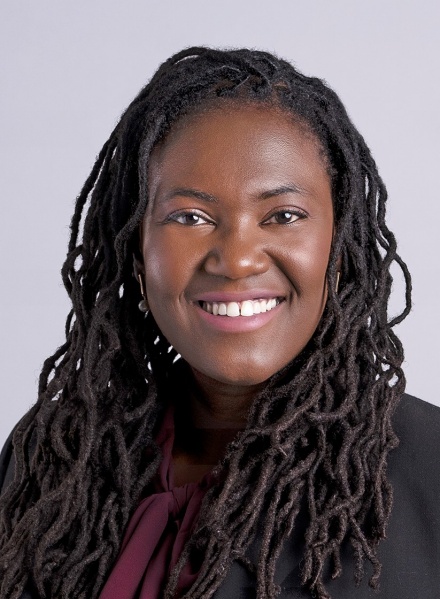
Paris Wicker is an assistant professor in the Department of Educational Leadership and Policy. Her interdisciplinary research, informed by a decade of experience in higher education in student affairs and college admissions, contributes to scholarship exploring the conditions and consequences of success and well-being in higher education, especially for Black and Indigenous students, faculty and staff.