From ‘Ice Ice Baby’ to engineering: GSE alum’s ‘Little Beats’ brings STEM to preschoolers
BY DANIELLE LEGARE
A preschooler doesn’t need to know what “engineering design” means to practice it. Sometimes it starts with exploring classroom materials, sketching an idea, building a simple structure and then figuring out how to make it work even better the next time.
That hands-on, iterative approach is central to Jennifer McDonel’s work. A GSE alumna, McDonel, PhD ’13, was recently promoted to professor of music and associate dean of the College of Visual and Performing Arts at Radford University in Virginia. She is also the director of music education at Radford and the co-creator of “Little Beats,” a growing collection of children’s songs that intentionally connect early music development with STEM concepts.
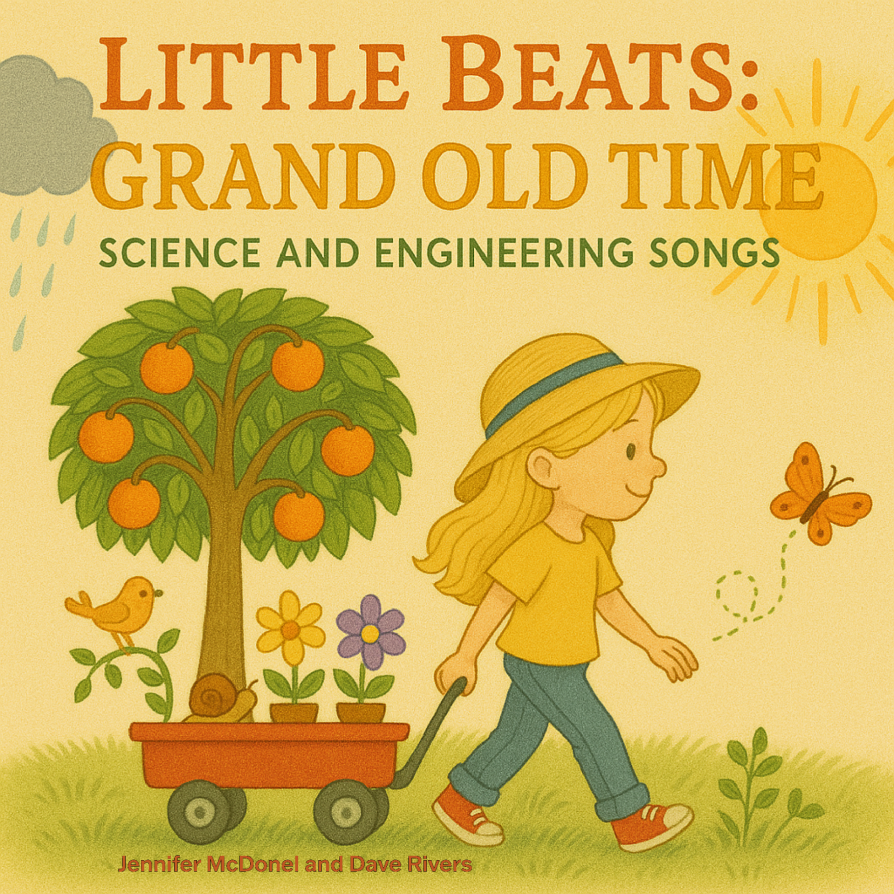
McDonel’s newest children’s album, “Little Beats: Grand Old Time, Science and Engineering Songs,” was released July 29, 2025.
From theory to song
For McDonel, the “Little Beats” idea dates back to her time at UB, where she was fascinated by how young children learn before subjects become separate classes in schools.
“I realized young kids have a more holistic approach to learning,” she said. “Their learning is not really separated by subjects yet. Everything is learning by doing.”

At GSE, McDonel studied and worked as a graduate research assistant in early childhood music with Maria Runfola, emeritus professor of music education. She later served as a graduate assistant with former GSE faculty members Doug Clements and Julie Sarama in an early mathematics lab. Those experiences helped her identify parallels between what Clements and Sarama describe as “learning trajectories” in mathematics and what music learning theory calls “music learning sequences.”
“That’s why I decided to do my dissertation work on potential connections between early childhood music learning and early childhood mathematics learning,” McDonel said.
In 2022, those connections moved from theory into practice. McDonel began writing children’s songs that integrate music with STEM learning, in partnership with Zero to Three, a national nonprofit focused on early development.
“I was looking for vocabulary, concepts and actions on objects that young children do, and then I wrote the songs around that content and vocabulary,” she explained.
The “Little Beats” project now includes multiple albums, including “Little Beats: Counting, Shapes, and Sets,” released in 2023, in addition to “Little Beats: Grand Old Time, Science and Engineering Songs.”
McDonel and Dave Rivers, her husband and collaborator, are also developing a third set of songs tied to early literacy concepts for children as young as 18 months.
Designed for children … and grown-ups
Even as the content maps to math, science, engineering or literacy, McDonel emphasizes that the music itself is carefully designed for young children’s musical growth. She aims to build what she calls “listening vocabulary,” helping children develop the aural foundations needed for singing later on.
“When we provide a rich musical environment with many styles, genres and tonalities, we’re helping build children’s brains for music. I’m not just creating what’s most common—major tonality and duple meter, which dominate popular music—but a wider range of tonalities and meters that children can simply hear and experience in a fun, active way,” she said. “And if children are ready to use their singing voice, the songs are written in ranges that fit a young child’s initial singing voice.”
Just as important, she wants the music to feel human, active and genuinely enjoyable for families.
“We want parents to want to listen to this,” McDonel said. “So, we add what we call little musical ‘Easter eggs.’ In one of the songs, we use a melodic pattern inspired by ‘Ice Ice Baby.’ We change it slightly, put it in a different tonality and write a completely new melody over it. The funny part is that the song is actually about ice melting, so it becomes a playful wink for adults who catch the reference.”

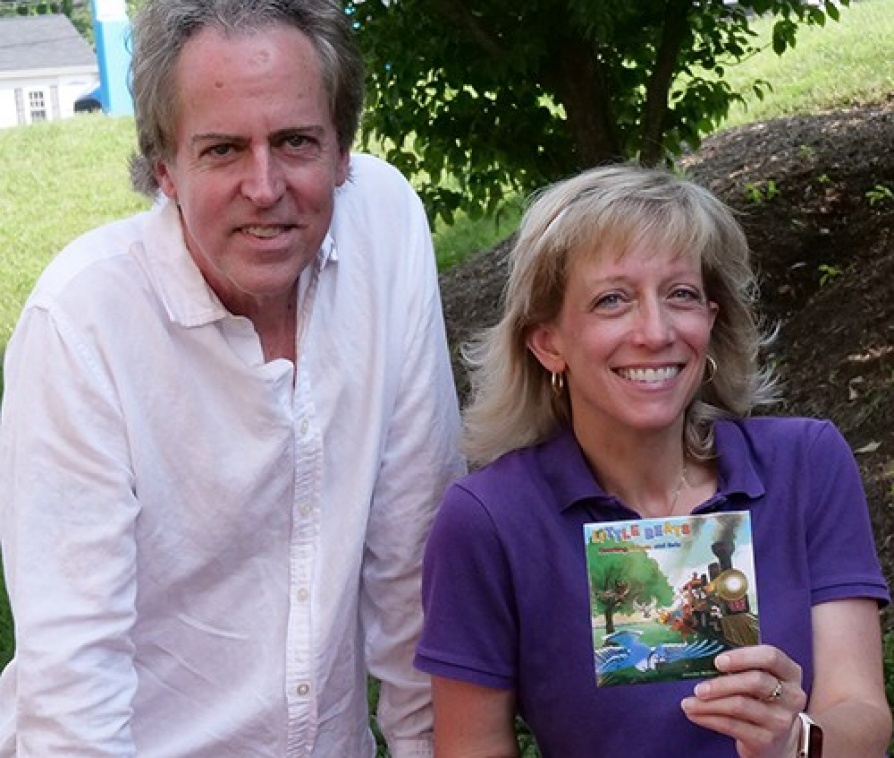
Jennifer McDonel and Dave Rivers, her husband and collaborator.
As McDonel progresses on her musical journey, she has advice for students who hope to blend creativity, research and education:
“Work hard, be open to possibilities and follow paths just to see where they go.”