
Published July 16, 2026
BY DANIELLE LEGARE
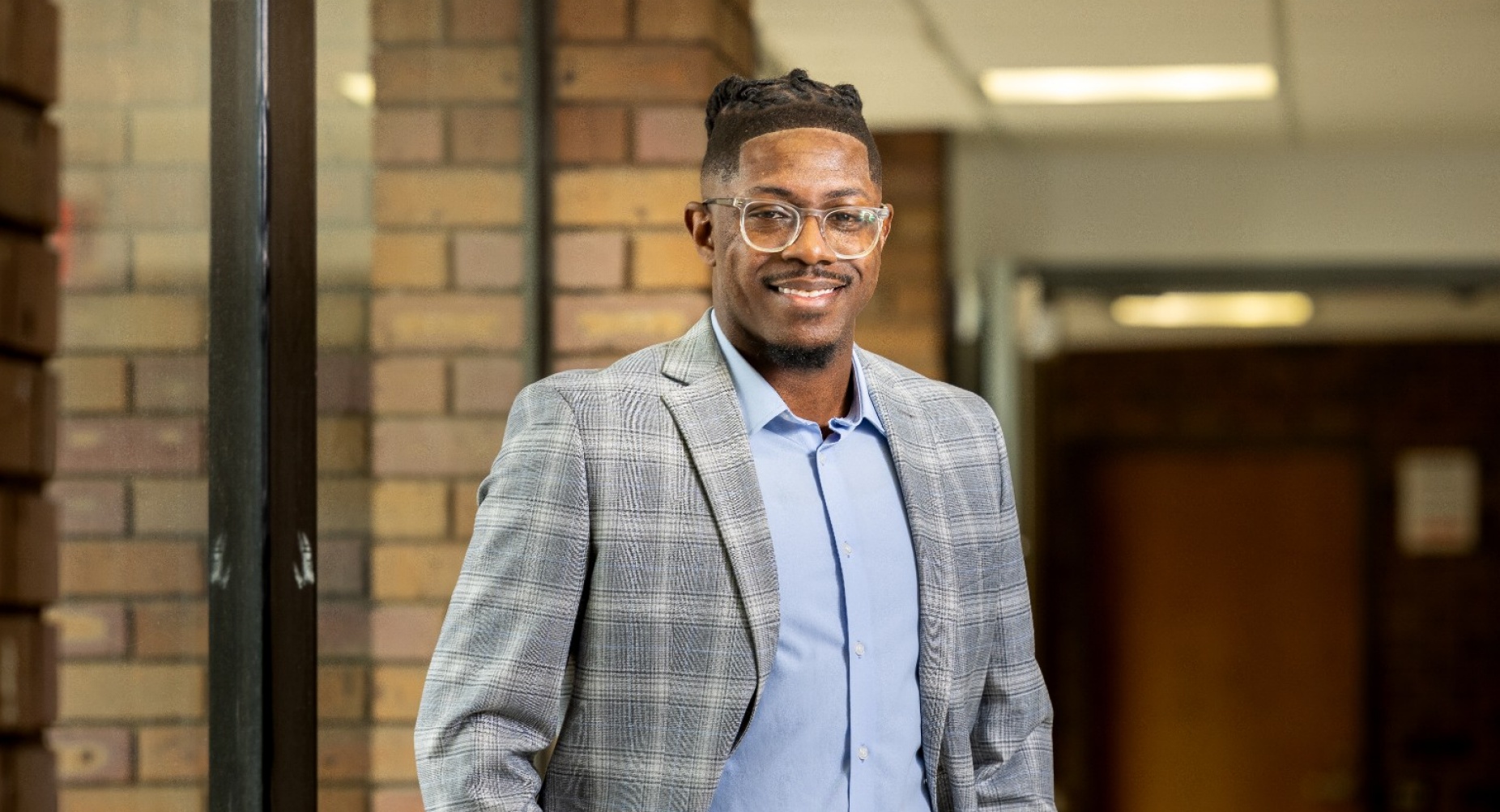
GSE faculty member Jacoby Loury selected for emerging scholar program
Jacoby Loury wants to help school counselors move from broad conversations about culturally responsive care to practical approaches they can use with students, families and school communities.
That work will now continue through a national cohort of scholars focused on advancing research in school counseling.
Loury, assistant professor of school counseling at the University at Buffalo Graduate School of Education, was selected for the 2026-28 cohort of the Professional School Counseling Journal Emerging Scholars Program, an initiative of the American School Counselor Association connected to its flagship journal, Professional School Counseling.
The program supports early career faculty, doctoral students and practicing school counselors as they develop their scholarship and build community with others in the field. It also aims to improve research quality in school counseling by preparing strong reviewers and future contributors to Professional School Counseling, while helping diversify the researcher and academic pipeline.
According to Loury, the recognition was unexpected. “I was a bit surprised,” he said. “I didn’t know fully what to expect from the program, and even now, I’m still learning the full scope of the expectations. But I perceive myself as an emerging scholar, and it just felt like a proper fit.”
The program brings cohort members together monthly to review current literature, discuss the research and publishing process, and work toward developing a future special issue of Professional School Counseling.
“Oftentimes, school counselors have a great ability to step into the role of a school counselor as it relates to practice, but those research skills are new, and we’re novices as it relates to research,” Loury said.
Loury’s research focuses broadly on the impact of race, ethnicity and culture on counseling and counselor education, anti-racist school counseling practice and culturally relevant counseling approaches, including gaming and Hip-Hop. His work is shaped by his experience as a former high school counselor and his interest in helping counselors better support students whose identities and needs are too often misunderstood or overlooked.
“Counseling, historically, has not been a safe space for Black people,” Loury said. “School counseling is a predominantly white female field, and many—regardless of race, ethnicity, gender or culture—often struggle with understanding what culturally responsive support and care looks like.”
His goal is to help the field move beyond general recommendations and toward clearer applications for practice.
“How do we really support these conversations of race, ethnicity and culture, not only individually with students and parents, but on a building level, at the district level? There are often textbook recommendations to do so, but there aren’t practical applications that are provided,” he said.
Loury is also exploring how gaming culture can inform counseling practice. A lifelong gamer, he views gaming as an important part of the identity of many young people and adults. His research examines how counselors can better understand identity, including both the strengths associated with gaming and the harm that can occur in gaming spaces.
“I’m not just approaching it with rose-colored lenses,” he said. “People experience harm, discrimination, racism and sexism through gaming as well, and I’m looking to really have a deeper understanding of what that scope is and how we can intervene.”
Loury shared that, since joining GSE in 2024, he has found profound support from his colleagues, including Amy Reynolds, professor and chair of the Department of Counseling, School and Educational Psychology, and Amanda Nickerson, SUNY Distinguished Professor and director of the Alberti Center for Bullying Abuse Prevention.
“Jacoby Loury is the kind of emerging scholar we hope to cultivate at GSE—one whose research is rigorous, timely and grounded in the needs of students and communities,” said Reynolds. “His selection for the Professional School Counseling Journal Emerging Scholars Program recognizes the importance of his work on culturally responsive school counseling and his potential to shape the future of the field.”
As he begins the program, Loury is looking forward to learning alongside other doctoral students and early-career faculty across the country who are asking similar questions about research, practice and the future of school counseling.
“I want to have an imprint on the school counseling field,” he said. “I’m just not sure what that looks like, or what the pathway looks like to really be a scholar in this world... The Emerging Scholars Program has been a great source of answers for unveiling a lot of the mystique of academia, and that’s something that I’m really grateful for.”