
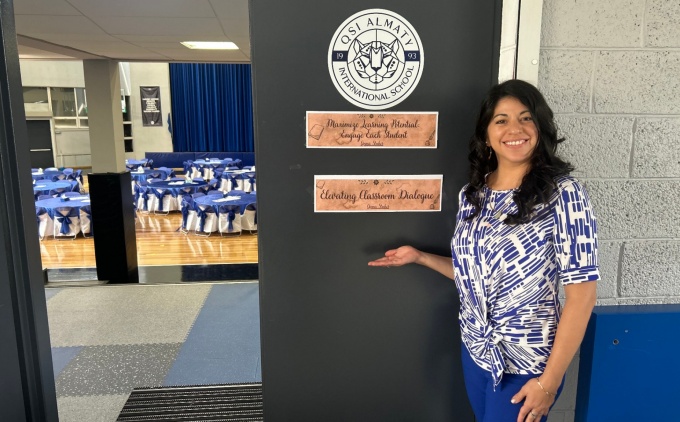
Anna Stukes, a GSE doctoral student, was invited to serve as a keynote speaker at the CAFA Teachers’ Conference in late September.
Published April 21, 2026
BY DANIELLE LEGARE
First-semester PhD student takes the podium on global stage
When Anna Stukes began her PhD in the fall of 2025 at the University at Buffalo Graduate School of Education, she expected rigorous coursework and long nights of reading. What she didn’t expect was delivering two keynote addresses at an international conference in Kazakhstan just weeks into her first semester.

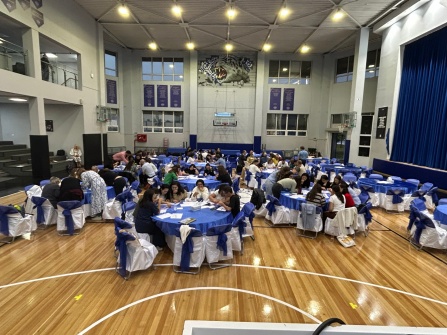
CAFA Teachers’ Conference
With more than a decade of experience as an English as a New Language (ENL) educator, instructional coach and professional development specialist, Stukes was invited to serve as a keynote speaker at the CAFA Teachers’ Conference in late September. While she was initially contacted the previous year as a potential last-minute replacement, this time, she was formally invited and committed to delivering a keynote at the conference just before beginning her doctoral studies.
A student in GSE’s language education and multilingualism program, Stukes’ background in bilingual education and professional learning aligned with the conference’s focus on supporting diverse learners in international school settings.
She delivered two keynote sessions, “Maximize Learning Potential: Engage Each Student” and “Elevating Classroom Dialogue.” She also conducted classroom observations and provided educators with feedback.
“Serving as a keynote speaker is an extraordinary accomplishment for anyone, but for a first-semester PhD student, it's truly remarkable,” said Erin Kearney, professor and chair in the Department of Learning and Instruction.
Drawing on her experience working with English language learners in Rochester and through the Mid-West Regional Bilingual Education Resource Network—where she serves as a professional development specialist and regional coordinator for the Puerto Rican/Hispanic Youth Leadership Institute (PR/HYLI)—she emphasized the importance of understanding students’ linguistic identities and building meaningful relationships.
“I really wanted them to walk away with an understanding of their students,” she said. “Even within the same classroom, students come in with different language levels and experiences. When we recognize that, we can use strategies that support their language development in more intentional ways.”
During the conference, Stukes facilitated conversations about personal culture and identity. In the process, she found herself learning alongside participants, including about the concept of “third culture kids”—students navigating identities across multiple cultural spaces.
“It was a great experience to see how they were engaged in that learning,” she said.
The opportunity also carried a personal connection. Stukes’ brother and his family have lived in Kazakhstan, where he teaches, for the past four years. He was able to attend her session and even share how he implemented her strategies in his own classroom.
Based in Rochester, Stukes balances her professional work with her doctoral studies, commuting to Buffalo one to two times a week. After nearly 20 years away from formal education, returning to the classroom as a PhD student has been both humbling and energizing.
“Some days I feel like my brain is exploding, and other days I feel really good about making sense of what I am learning,” she said. “I just like the whole process of being a constant lifelong learner. We don’t have all the answers. The journey is continuous learning.”
Part of Stukes’ journey is her work with PR/HYLI—a statewide leadership and civic engagement program for high school students of Hispanic descent. She has seen firsthand how language, identity and civic engagement intersect as students in the program develop leadership skills, debate real bills and study the legislative process.
That experience is now shaping her emerging research interests, particularly around how students from different language backgrounds come together to solve problems and how those experiences can influence long-term academic and career pathways. She is especially interested in the potential for this work to inform policy and create more equitable educational opportunities.
“In the end, we always know what’s important,” she said. “We need to remember where we’ve come from and that we are important, and to share what we have to offer with others.”

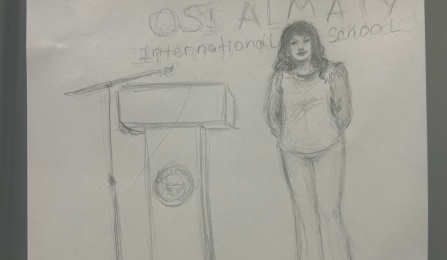
A sketch of Stukes was made by an art teacher who attended the CAFA Teachers' conference.
Tuesday News Briefs feature the stories of the Graduate School of Education faculty, students and alumni who are engaged in their communities and making an impact through their hard work, dedication and research initiatives. If you have a story to share, please email us with the details for consideration as a future news feature. | Email Us Your Story