
Published January 27, 2026
BY DANIELLE LEGARE
GSE researcher receives new grant to strengthen New York State’s rehabilitation counseling workforce
Responding to a growing statewide need, a University at Buffalo Graduate School of Education researcher recently secured a $1 million grant from the U.S. Department of Education to support and train future rehabilitation counselors.

The award—Preparing Rehabilitation Counselors to Meet 21st Century Agency and Client Needs—will help address the significant demand for qualified counselors throughout New York State. More than 2.5 million New Yorkers have disabilities, and the U.S. Bureau of Labor Statistics projects a 23% increase in demand for vocational rehabilitation (VR) counselors over the next decade, far outpacing growth nationwide.
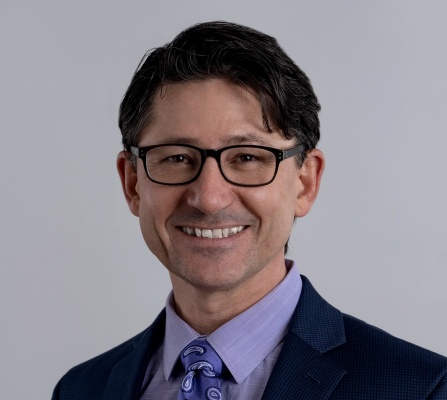
According to Scott Sabella, associate professor of counseling, school and educational psychology and principal investigator on the project, the funding represents an opportunity to make a meaningful statewide impact.
“We’re very thankful for this support,” Sabella said. “This grant allows us to prepare more counselors who are ready to meet the needs of individuals with disabilities and the agencies that serve them.”
The project is supported by a team that includes co-investigators Omayra Muñoz-Lorenzo and Rebecca Jacob, both clinical assistant professors of counseling, school, and educational psychology, as well as senior project manager Tikana Truitt, a faculty member at Canisius University.
Meeting an urgent workforce need
Rehabilitation counselors work within a state–federal vocational rehabilitation system designed to help individuals with disabilities achieve employment, independence, community participation and long-term well-being. In New York State, these services are delivered through ACCES-VR—the Adult Career and Continuing Education Services Vocational Rehabilitation program—and the New York State Commission for the Blind.
“These agencies provide vocational rehabilitation services for people with the most significant disabilities,” Sabella said. “The transition from school to what comes next can be challenging, and vocational supports and early work experiences can help support success toward their independence goals.”
This emphasis on transition-aged youth was written into federal law through the Workforce Innovation and Opportunity Act of 2015 and continues to drive demand for well-prepared counselors. At the same time, VR agencies nationwide are experiencing staffing shortages and high turnover.
Sabella’s research focuses on recruitment and retention issues within the field.
“Personnel challenges affect a system that is already overwhelmed,” he said. “Supporting these agencies means supporting individuals with disabilities and our communities.”
A program positioned to lead
GSE’s rehabilitation counseling master’s program is uniquely equipped to meet statewide needs. It is one of only three CACREP-accredited programs in New York State and offers both on-campus and fully online options.
Sabella’s grant leverages existing program partnerships, including a long-standing collaboration with ACCES-VR. Because of its coordinated training model, the rehabilitation counseling program can align ACCES-VR’s traineeship program with students’ internship requirements, giving scholars valuable field experience while agencies gain support from emerging professionals.
In addition, the new grant provides tuition and fees for scholars pursuing master’s degrees in rehabilitation counseling, along with structured academic and professional support. Scholarship recipients commit to a service obligation, working for the state VR agency or one of its community partners after completing the program.
“With the new grant, we’ll do bi-monthly check-ins with all scholars to provide academic support, scholarship-related support and career support,” Sabella said.
A career and project grounded in purpose
Sabella’s commitment to the field is rooted in years of direct service. He has worked with individuals with brain injuries and their families, adults with developmental and intellectual disabilities and clients receiving psychiatric care. Those experiences shaped his understanding of the critical role work and community participation play in well-being.
“I understood how socialization and finding purpose were so important,” he said. “Work is one of the ways we define ourselves. Vocational rehabilitation services reach beyond overcoming employment barriers; they promote community participation, empowerment and general well-being.”
Although the work can be challenging, Sabella believes it is also rewarding: “You see people when they’re in crisis, and sometimes at their most vulnerable,” he said. “But you also see advancement. You see lives changed.”
With this in mind, the project team is focused on strengthening the statewide rehabilitation workforce. From Sabella’s perspective, success will mean helping agencies address staffing shortages so they can expand their capacity to serve individuals with disabilities across New York.
“If we can help improve recruitment and retention, we can better support the individuals who rely on these services every day,” he said.
Notice
The contents of this article were developed under grant H129B250031 from the U.S. Department of Education Rehabilitation Services Administration. The Department does not mandate or prescribe practices, models or other activities described or discussed in this document. The contents of this article may contain examples of, adaptations of and links to resources created and maintained by another public or private organization. The Department does not control or guarantee the accuracy, relevance, timeliness or completeness of this outside information. The content of this article does not necessarily represent the policy of the Department. This publication is not intended to represent the views or policy of or be an endorsement of any views expressed, or materials provided by any Federal agency (EDGAR 75.620).
Tuesday News Briefs feature the stories of the Graduate School of Education faculty, students and alumni who are engaged in their communities and making an impact through their hard work, dedication and research initiatives. If you have a story to share, please email us with the details for consideration as a future news feature.